inbetween days

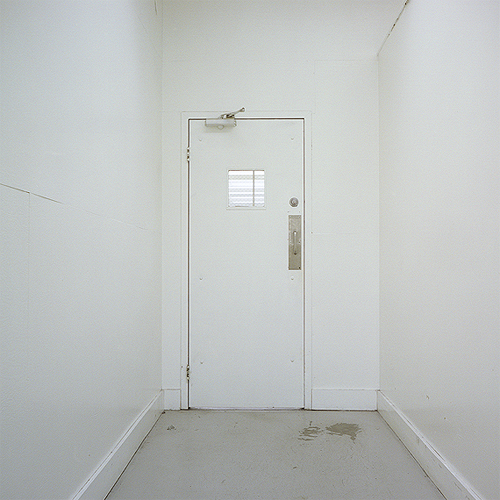
At first, I had the intention of writing a longer introduction to Ben Couvillion's photographs. I easily could have, since they speak multitudes. But then I received two paragraphs from Ben himself, elaborating on his photographic practice. Reading it through, I realized that nothing I could ever write would quite match up.
Let me just say this: from the very first time I saw Ben's photographs, I fondly remember his diner booth photo (featured below). It is such a beautiful combination of carefull framing, perfect exposure, wonderful colors, and subtle meaning - easily parallelling other great explorers of things American like Jeff Brouws, William Eggleston, and Chris Verene. I imagine that you, dear reader, will will find your own personal favorite too.
In his own words:
I am easily fascinated - always have been. The bright and sometimes odd colors that exist in seemingly uninteresting environments, and the wear and tear of things. Naturally man-made compositions waiting to be sought out and photographed – places that have become an extension of someone's personality, usually someone I've known – all their things scattered about. I can't get enough of it.
Much of my time making photographs is spent hovering over potential compositions in uncomfortable positions, holding my breath, so I will not shake or startle the image. I don't notice the leg cramps or backpain as I create – just the reversed image of what I'm seeing on my camera's ground glass – continuously fine-tuning what I see until I feel the urge to release the shutter. Then I take a deep breath and start again.
You will find more of Ben's work here.
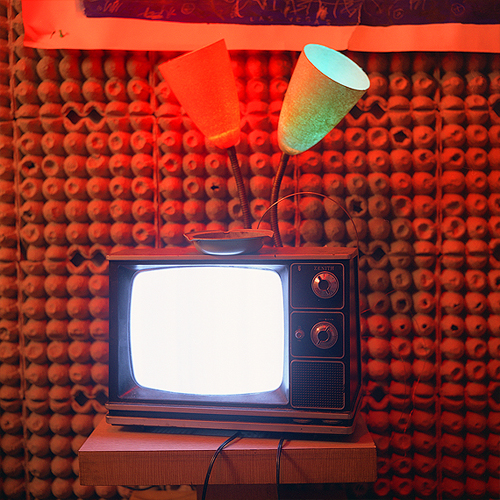


Photo: Linn Tenman. Please also look at Linn’s other pinehole photo at the F blog and the post about Camera Obscura by Ulf Fågelhammar.
I'm growing interested in Ronald Reagan, in many ways he is a fascinating person. Much more so than ever the Bushes have been. I've looked through some of the Reagan Presidental Archives, following Joakim's useful link the other day.
Rights and source is Reagan Library Archives.


When looking through the photos, I travel back to this very different period of time. For a few years, it felt like we could escape "Destiny", and end up somewhere else, in a better world.
Think about these meetings this duo held, and their developing relationship! This must have been a absolutely fascinating moment in time.
I read somewhere that Reagan's personal ambition was to become friend and convince the person in each room which seemed the most adverse towards him at all times. I wonder what happened when he met Gorbachev then?
Of course this nonsense could not go on for ever. The picture above is chilling to me, in all its (then) positive connotations. Avoiding the word games, a darker future of course was lurking around the corner. But what a fascinating paranthesis in history this was!
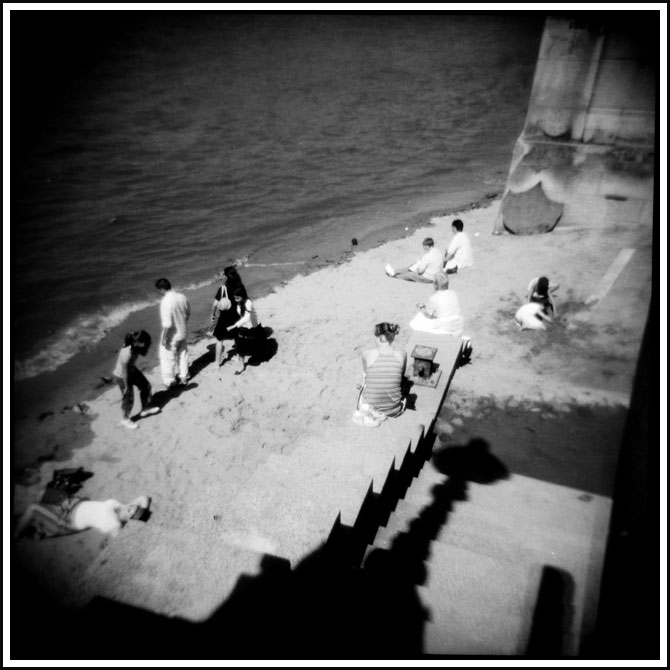 Photo: Paul Boocock
I think it was Thomas who brought up the subject of the lone star,
the individual image. Also Christer Strömholm did that. This is a
lone star to me. I am glad Paul sent us this magnificent Holgavision
from the river Thames. I love it!
-urbano
Underground
Berlin U-Bahn, Métro de Paris, London Underground, New York City Subway
Stockholms tunnelbana...or any other underground in the big cities of the
world. They fascinate...all these people and faces...the accidental...
the unpredictable.
I found Sebastians great photos from the Metro of Buenos Aires and
was delighted to see his interpretation of this subject.
His serie of pictures is called "Mirada Subte"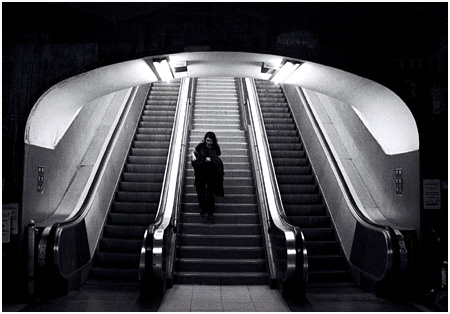
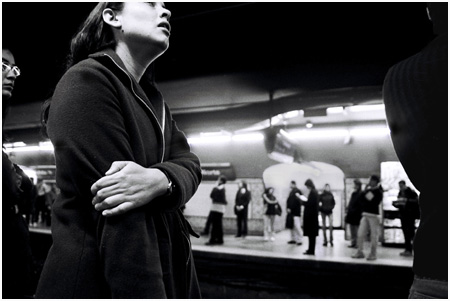
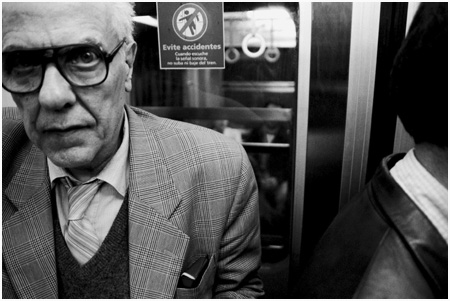


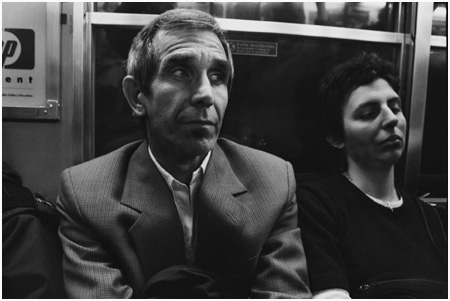
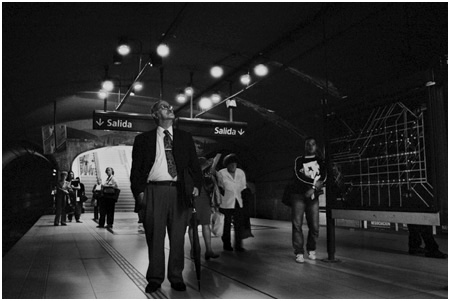
All photos: Sebastian Izquierdo
Born in Buenos Aires 1975. Picture designer and Sound designer. Film studies
and specialized in cinematography at "Sindicato de la Industria Cinematográfica
Argentina (SICA). Studied photo journalism with Tony Valdez at "la Asociación
de Reporteros Gráficos de la República Argentina (ARGRA) and also assisted
at many workshops about communication, creativity and analysis of pictures.
Participated in workshops and seminars with teachers like Daniel Ponce,
Tony Valdez, Daniel Merle and María Kusmuk.
I have participated in various joint exhibitions in my country. Some of my work
can be found at fotorevista.com.ar ; gandsasphotogallery.com.ar
Invited by Ulf Fågelhammar
 SOUP CANS -- FAB 5 FREDDY -- BRONX 1980
I stumbled upon a beautiful project. First published over the course of more than twenty years (1751-1777), the 32 volumes of the Encyclopédie include 21 volumes of text with more than 70,000 articles on subjects ranging from asparagus to zodiac.
Here is one article written by Diderot about beautiful vs nice. Enlightening stuff! Try searching the translated and free texts for more enlightment. Art is a good one for example.
Beautiful / Nice
Beautiful is opposed to nice, and describes something great, noble, and regular; it is admired. As for nice, it is finely and delicately made; it appeals. The beautiful in works of spirit, supposes some truth in the subject, some elevation in the thoughts, some soundness in the expression, some novelty in the turn, and some regularity in the behavior: singularity and brightness are enough to make them nice.
Some things can be nice or beautiful, like comedy; some others can only be beautiful, like tragedy. There sometimes is more merit to have found a nice thing than a beautiful one; in such occasions, a thing only merits the epithet of beautiful because of the importance of its object; and a thing is called nice, only because of the lack of importance of its object. Care is only granted then to the advantages, and the difficulty of invention is overlooked. It is so true that the beautiful carries with it some idea of greatness, that the same object previously called beautiful, would only appear nice, if it had been done smaller.
The spirit is a maker of nice things; but the soul produces great ones. Ingenious traits are ordinarily only nice; there is beauty everywhere one notices feeling. A man that says that a beautiful thing is indeed beautiful, does not offer great proof of his understanding; one that says that the same thing is nice, is foolish, or has no understanding. Boileau, that impertinent, says that Corneille sometimes is nice.
Artur is in my opinion the most gifted photographer of younger generation, perhaps not just in Poland. He started showing his works in galleries, as shaped photographer in age of 19. Bit later he won Canon contest for pro photographers with series of colour works from India. Canon sponsored him another trip to India, which resulted in even better works. 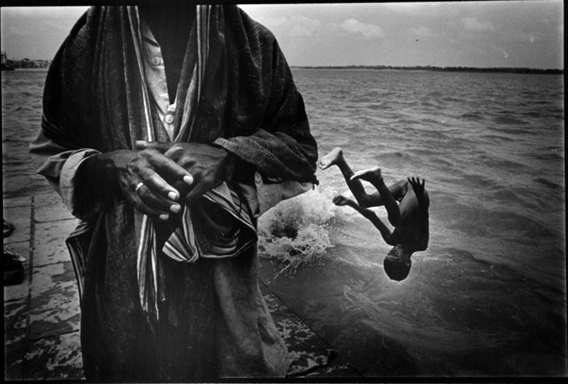
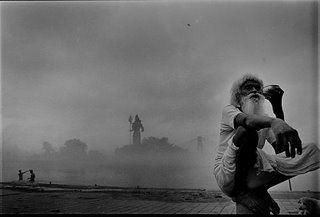

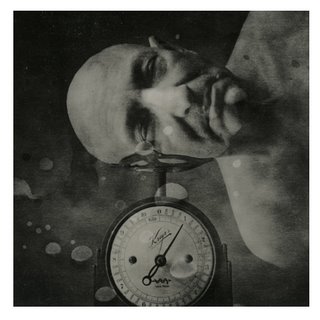
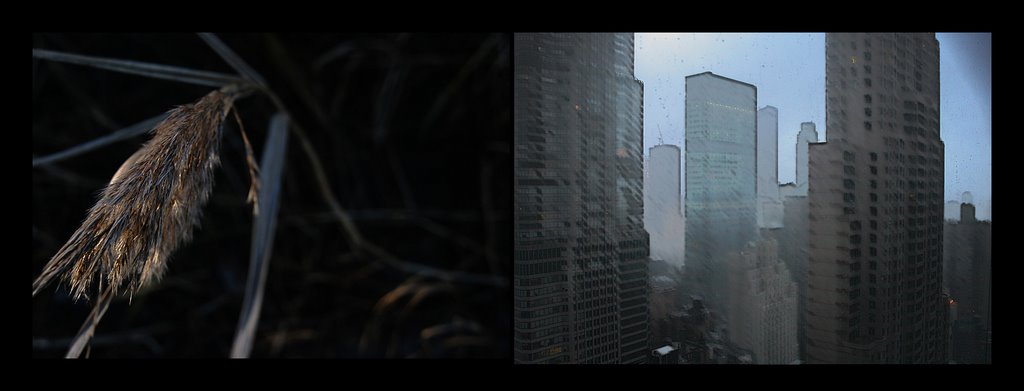
 Photo: Helena Nilsson
About being....
"I´m nothing
I´ll always be nothing
I can´t want to be nothing
Apart from that, I have in me all the dreams of the world"
Àlvaro de Campos, "The Tobacco Shop"

 Photo: Ulf Fågelhammar
I was actually looking for some information about climate change, since Per-Arne brought up this issue. But the gryphons led me to Persia (they have appeared in Persian art) and yes...! Of
course! Montesquieu and his Persian Letters written 1721. He must have said something about climate change. Well, I did not get so far. Instead I got stuck with this:
"COFFEE is very much used in Paris, there are a great many public houses where it may be had. In some of these they meet to gossip, in others to play at chess. There is one where the coffee is prepared in such a way that it makes those who drink it witty: at least, there is not a single soul who on quitting the house does not believe himself four times wittier than when he entered it."
LETTER XXXVI -Usbek to Rhedi, at Venice (translated by John Davidson) Montesquieu was referring to Cafe Procope
So where to go from here? I am thinking of an Espresso machine from 1961, which is said to produce the most delicate coffee in Stockholm. Found at this café.
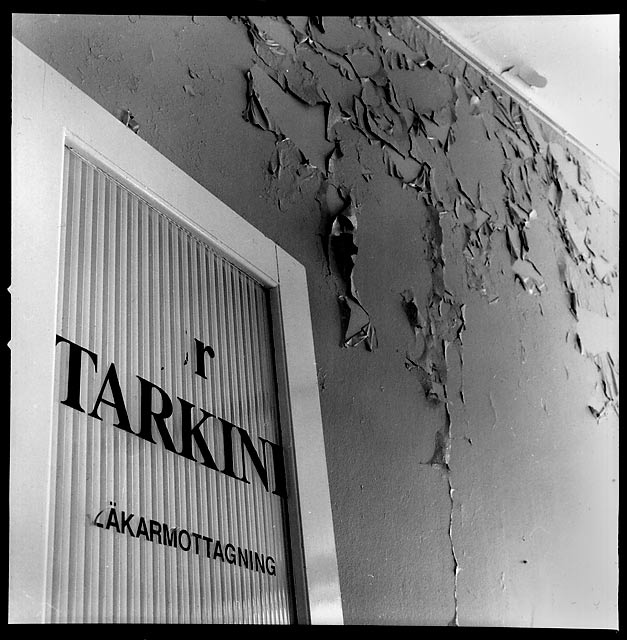
(I think all of this is the work of Dr Tarkini)
Time for some time travel. Here are some of Kim's family, taken on Jylland in the beginning/middle of the century. Let me present the two families of Fabricius and Dauer. 
The Fabricius family, ca 1937
 Martin Fabricius faced a tragic destiny, ca 1944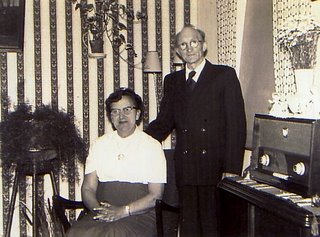
Rosa och Daniel Fabricius
And here are the Dauer family from approximately the same period.

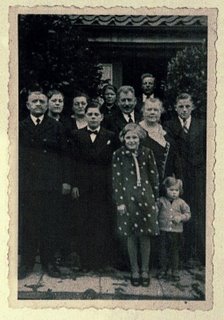

These are pictures that mean a lot to Kim, I know. I wish I had similar pictures from my own past, but I haven't. These "time travels" gives a lot of identity to ourselves, I think.


 Posts
All Comments
Posts
All Comments